Your intentions may be sincere. What did your actions prove?
Before you make another plan, look at what your recent behaviour reveals about what is actually moving you.
The Center for Motivation Research Scorecard helps you look honestly at your last 4–6 weeks and see whether what matters to you is becoming action, where intention may be getting lost, and what kind of correction may matter next.
The Scorecard is not asking whether you care. It asks what your recent behaviour reveals about how motivation is becoming action.

A few honest minutes should give you a useful baseline.
After completing the Scorecard, you receive a practical result profile and a first area for reflection and correction.
- Your Motivation & Execution Score.
- Your current result profile.
- A clearer view of where intention and action are working together.
- A clearer view of where attention, priorities, or follow-through may be breaking down.
- Your first area to examine or correct.
- A suggested next step for reflection, learning, or practice.
The value is not the number by itself. The value is seeing the pattern clearly enough to understand what may need to change.

Answer from your recent pattern.
Not your best week. Not your worst week. Your real pattern across the last 4–6 weeks.
Open the Scorecard
The Scorecard opens in a separate form page so the experience stays clean and reliable.
Answer honestly
Base your answers on what has actually been happening, not what you hoped would happen.
Receive your result
Get your score, result profile, and first area for reflection by email.
Want the journey explained first?
Watch this short overview before you begin.
It should help you understand why the Scorecard exists, how it connects motivation with action, how to answer honestly, and what you receive after completing it.
Keep one rule in mind while watching: answer from your real pattern across the last 4–6 weeks.
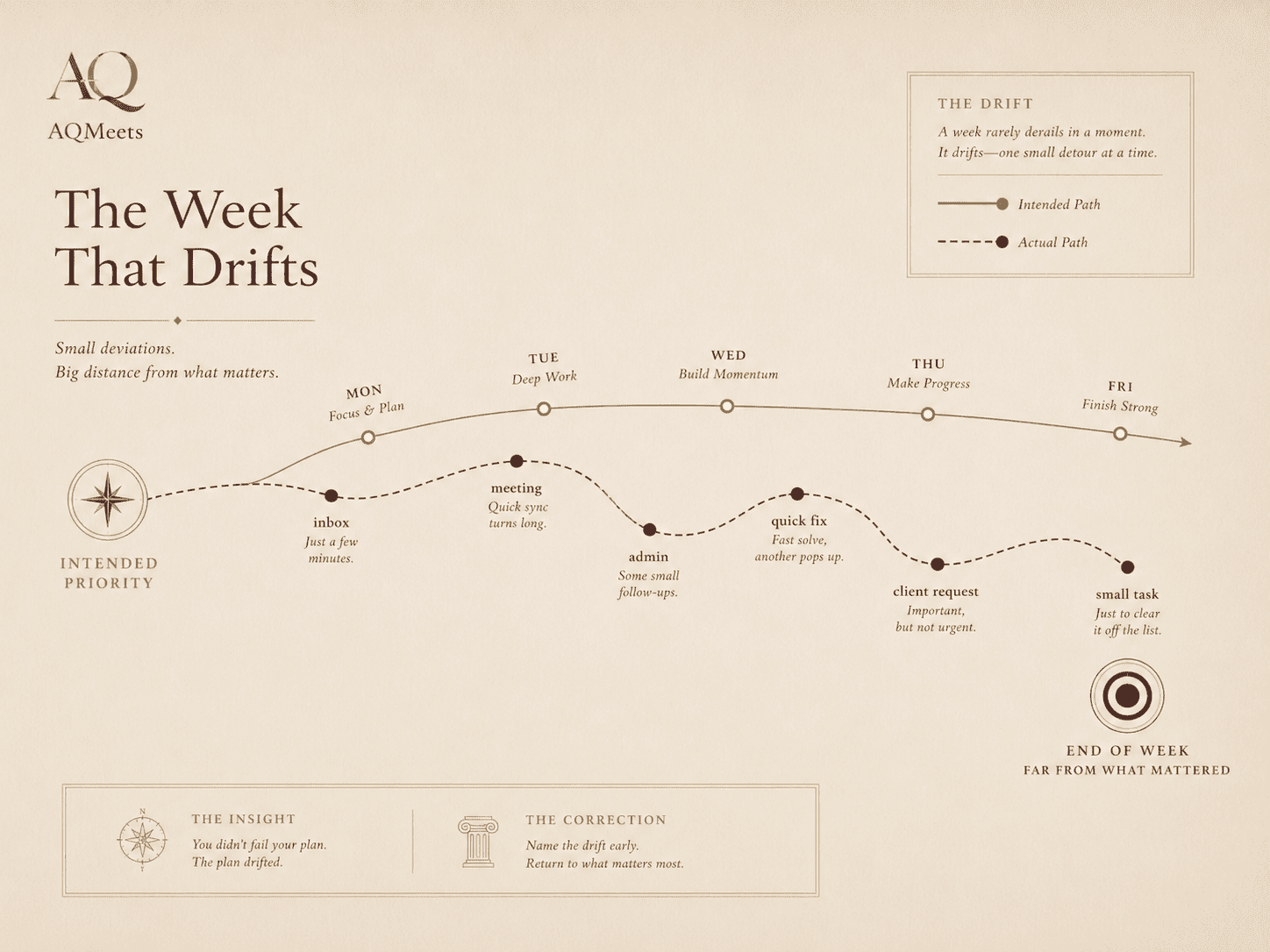
The week often leaks through defensible detours.
Most drift does not look reckless.
- The meeting.
- The message.
- The request.
- The small fix.
- The admin task.
- The thing you could defend if someone asked.
Some of it had to be done. Still, the deeper question remains: did the right things move?
If you do not know where attention and action are being diverted, you may keep trying to fix the wrong problem.
The Scorecard looks at the practical conditions that shape motivated action.
It does not measure ambition or motivation as a feeling.
It looks at whether your recent weeks show enough clarity, priority protection, follow-through, review, and accountability to translate intention into evidence.
You answer a set of simple statements about your recent pattern. The Scorecard then gives you a result profile and a first area to examine more closely.

An undiagnosed pattern costs more than time.
It leads to misdirected correction.
- You try harder.
- You reset again.
- You add another tool.
- You blame your motivation or discipline.
- The real leak stays unnamed.
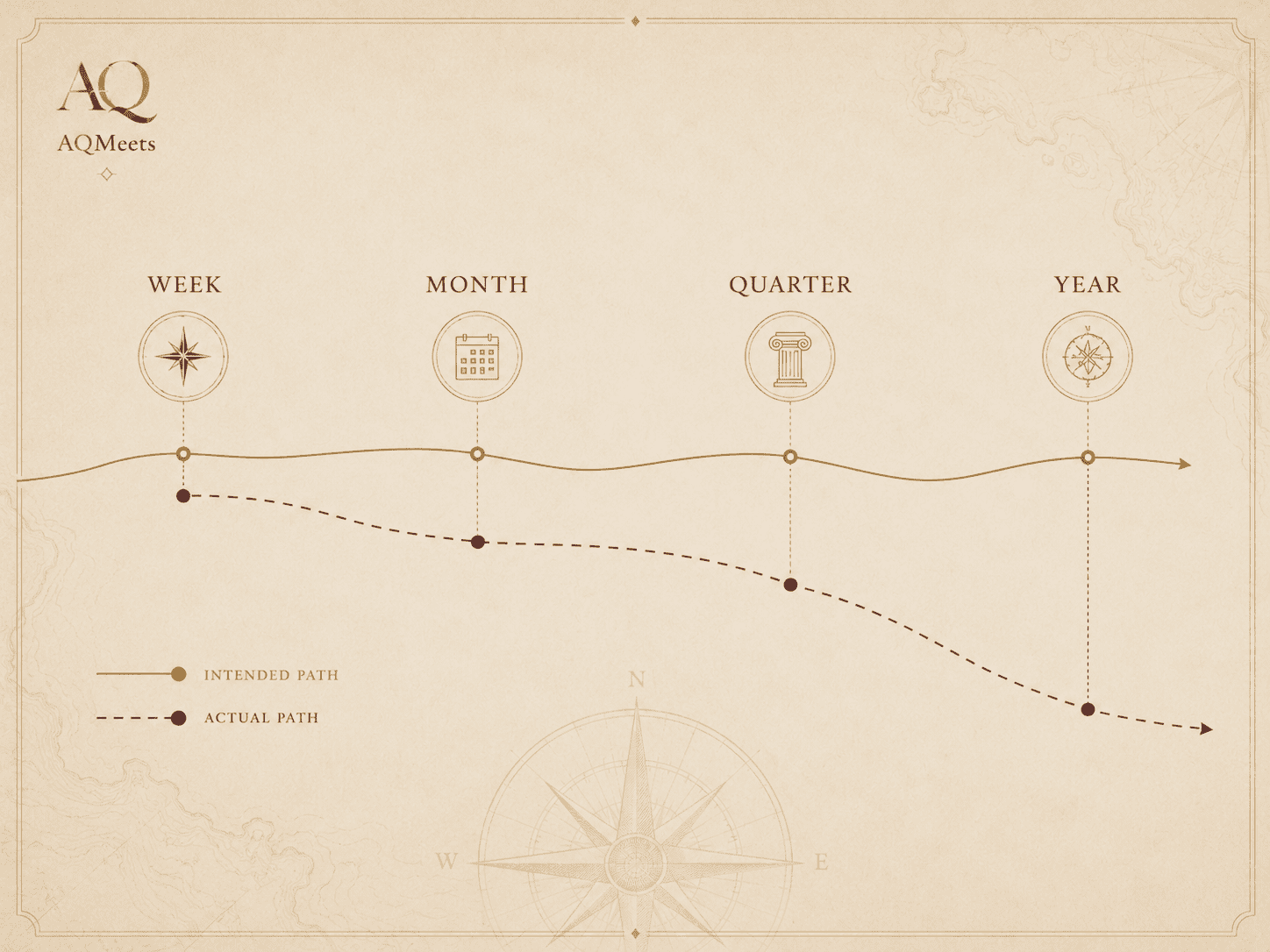
One week becomes a pattern. A pattern becomes a month. A month becomes a quarter.
You do not need another quarter to prove the pattern. Look honestly at the last 4–6 weeks.
Take the Scorecard if your intentions and actions may not be telling the same story.
- Your days are full, but important priorities keep moving to next week.
- You care about your goals, but your follow-through is less consistent than you want it to be.
- You keep resetting without understanding the underlying pattern.
- You use tools, plans, or good intentions, but important action still gets crowded out.
- You want a clearer view of how your motivation is translating into action.
This is for anyone engaged in serious self-directed work who wants to understand the relationship between intention, motivation, attention, and action.

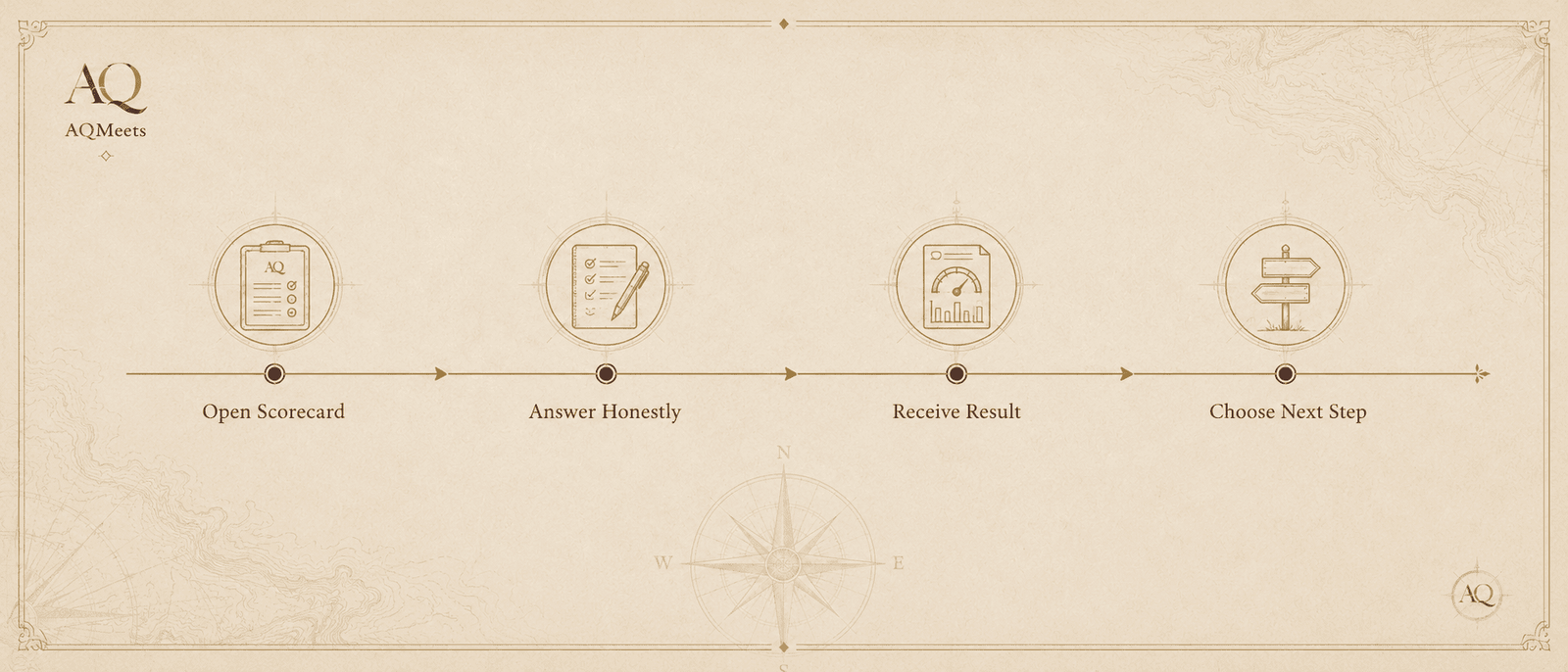
Four simple steps.
1. Open
The Scorecard opens in a separate secure form page.
2. Answer
Base your answers on your last 4–6 weeks. No preparation is needed.
3. Receive
Get your Motivation & Execution Score, result profile, and first area to examine.
4. Choose
Use your result to choose one useful question, change, or practice to explore next.
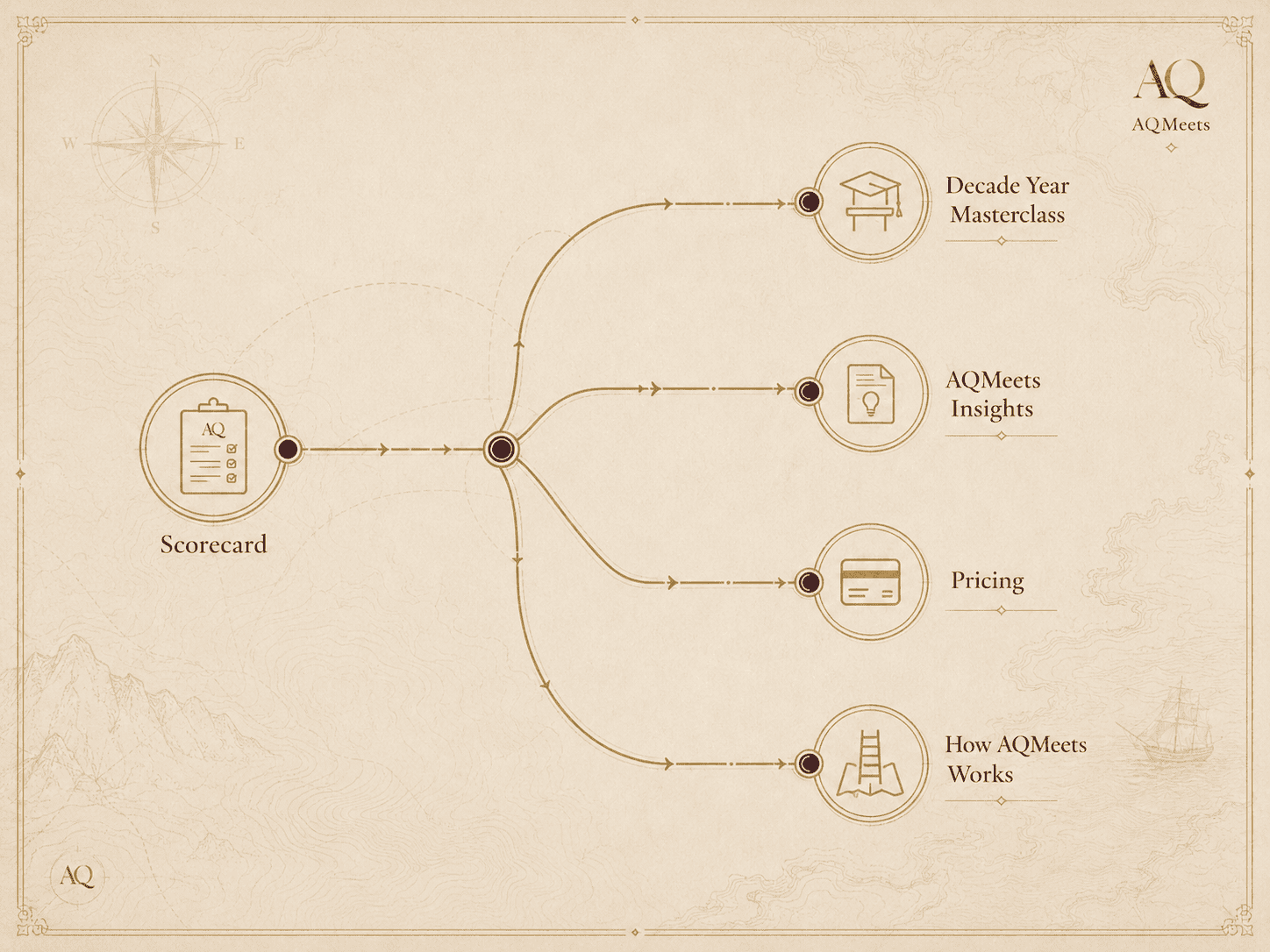
Use the result as a starting point.
Your result can help you see where intention is becoming action—and where it is not.
It may prompt a closer look at your priorities, attention, habits, environment, accountability, or the meaning attached to your goals.
It can also give you a baseline to revisit after you make a deliberate change.
The score is not a judgement of character. It is a snapshot of a recent pattern.
Use it to ask a better question about what is helping—or hindering—meaningful action.
Common questions before you begin.
Is the Scorecard free?
Yes. The Scorecard is free to complete.
You will receive your result and follow-up guidance by email.
How long does it take?
It should only take a few minutes.
Answer honestly based on your last 4–6 weeks. The more realistic your answers, the more useful your result will be.
What should I base my answers on?
Base your answers on your recent pattern across the last 4–6 weeks.
Do not answer from aspiration. Do not answer from guilt. Do not answer from one unusually good or bad week.
Answer from the pattern you can honestly recognise.
What do I get after finishing?
You receive your Motivation & Execution Score, your current result profile, and a short explanation of what the result means.
You also receive guidance on the first area you may want to examine or correct next.
Will I be pitched after completing it?
You may be invited to explore further research, educational resources, or practical pathways from the Center for Motivation Research.
The Scorecard result is intended to support reflection and informed choice, not pressure you.
Is my information private?
Your results are handled in accordance with the Center for Motivation Research Privacy Policy.
We do not sell your personal information to advertisers or data brokers. You can unsubscribe from follow-up emails at any time.
Ready to see what your recent actions are revealing?
A few honest minutes can show how your intentions are translating into action, where the pattern may be breaking down, and what may be worth examining next.