
Researching What Moves People From Intention to Action
The Center for Motivation Research begins with a hard question:
Or, more directly: what actually moves a person to do the good they already know they should do?
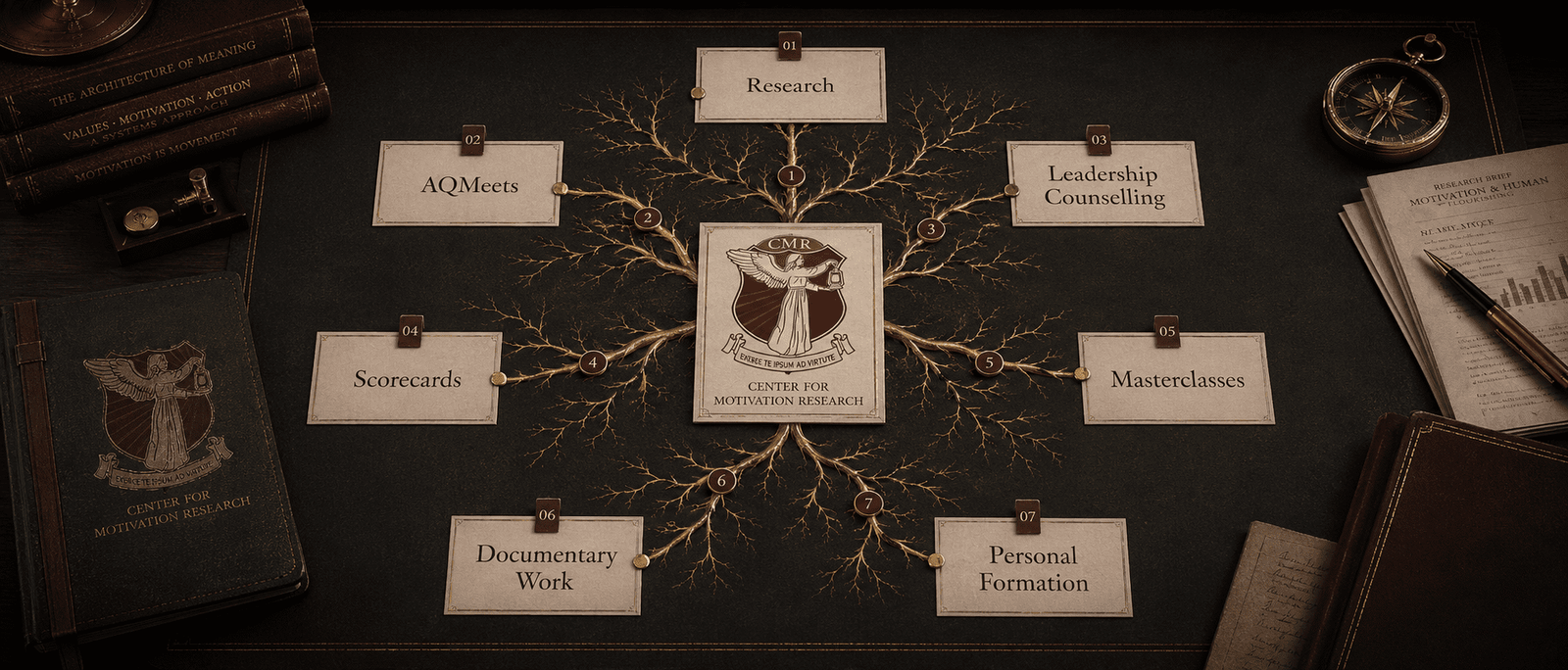
That question sits at the centre of our work.
Most serious people are not short of information. They have read the books, heard the advice, made the plans, bought the tools, and carried the private conviction that something in their life or work must change.
Yet intention often fails when it meets the week.
The Center studies that separation between what people know, what they value, and what they repeatedly do.
Our work is to understand why that separation happens — and to develop practical methods that help people see it, correct it, and return to the work that matters.
The Problem Is Not Only Productivity
This is not only a productivity problem.
It is a problem of motivation, meaning, attention, self-government, and return.
We have more instruction than ever. Yet many people find it harder to keep attention, govern desire, keep promises, and return to the work they claim matters.
The Center for Motivation Research was formed to examine this problem carefully.
The movement from conviction to conduct, from intention to reality, from meaning to action.
Modern Life Is Crowded With Instruction
There are books, apps, courses, podcasts, systems, and endless advice. Yet many people remain divided.
Activity Without Progress
They start more than they finish. They confuse activity with progress. They mistake pressure for purpose.
Insight Without Practice
They gather insight without turning it into practice. They remain busy enough to avoid the more honest question.
Competence Without Proof
The result is not always visible failure. Often it looks like competence, motion, availability, and demand.
But underneath, something begins to separate.
Values separate from behaviour. Ambition separates from discipline. Planning separates from proof. Knowledge separates from action. The life a person explains separates from the life that is actually being built.
Over time, that separation does not remain private. It shapes calendars, families, teams, companies, habits, reputations, and the kind of person a life is slowly producing.
The Center studies this problem. Not to shame people for falling short, but to understand what helps them return — honestly, practically, and repeatedly — to the duties and aims that matter.
Research That Does Not End in Commentary
We are concerned with applied formation: how serious ideas show up in the way a person spends a week, keeps a promise, corrects a drift, and carries responsibility.
Research
We study motivation at the point where knowledge fails to become action. This includes attention, habit, feedback, self-government, and the conditions that help a person keep faith with what he already knows.
Leadership Counselling
We help leaders and serious individuals examine the hidden contradiction between what they claim, what they tolerate, and what their actual conduct reveals.
Execution Rhythms
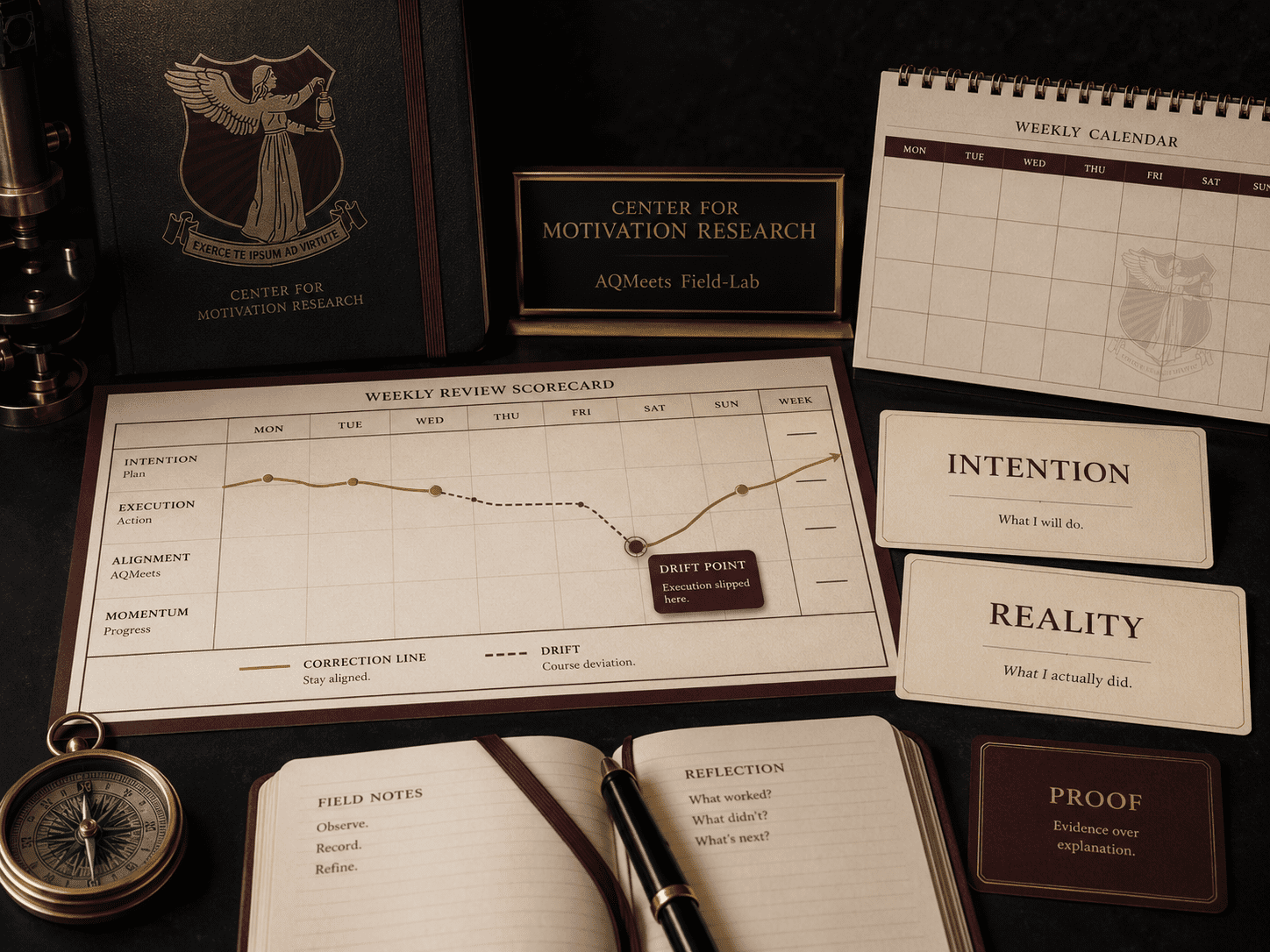
We develop scorecards, masterclasses, review practices, and structured programs that make drift visible early enough to correct.
The Root and One Working Branch
AQMeets is one of the Center’s main applied expressions.
Where the Center studies motivation, feedback, and meaningful action, AQMeets turns that work into a weekly operating discipline for founders, leaders, and builders.
It helps people review the week honestly, compare intention with reality, identify drift, and carry one correction into the next cycle of work.
AQMeets is not built for more motion. It is built for a truer weekly review of what the work is actually producing.
Its purpose is to help people become more honest about their rhythm, more disciplined about their attention, and more capable of returning to the aims they claim to serve.
An Institutional Home for a Long-Standing Question
The Center for Motivation Research was founded by John Angheli after nearly two decades of work across leadership counselling, higher education teaching, coaching, philosophy, and applied motivation research.
Across these settings, John kept meeting the same problem: capable people were rarely short of advice, but often struggled to convert conviction into ordered action.
The Center grew from this concern.
John’s work brings together leadership counselling, business and education, philosophical study, documentary work, and the development of practical programs such as AQMeets.
The common thread is the study of what moves people from insight into conduct — and what prevents that movement from taking place.
The Center gives this work an institutional home.
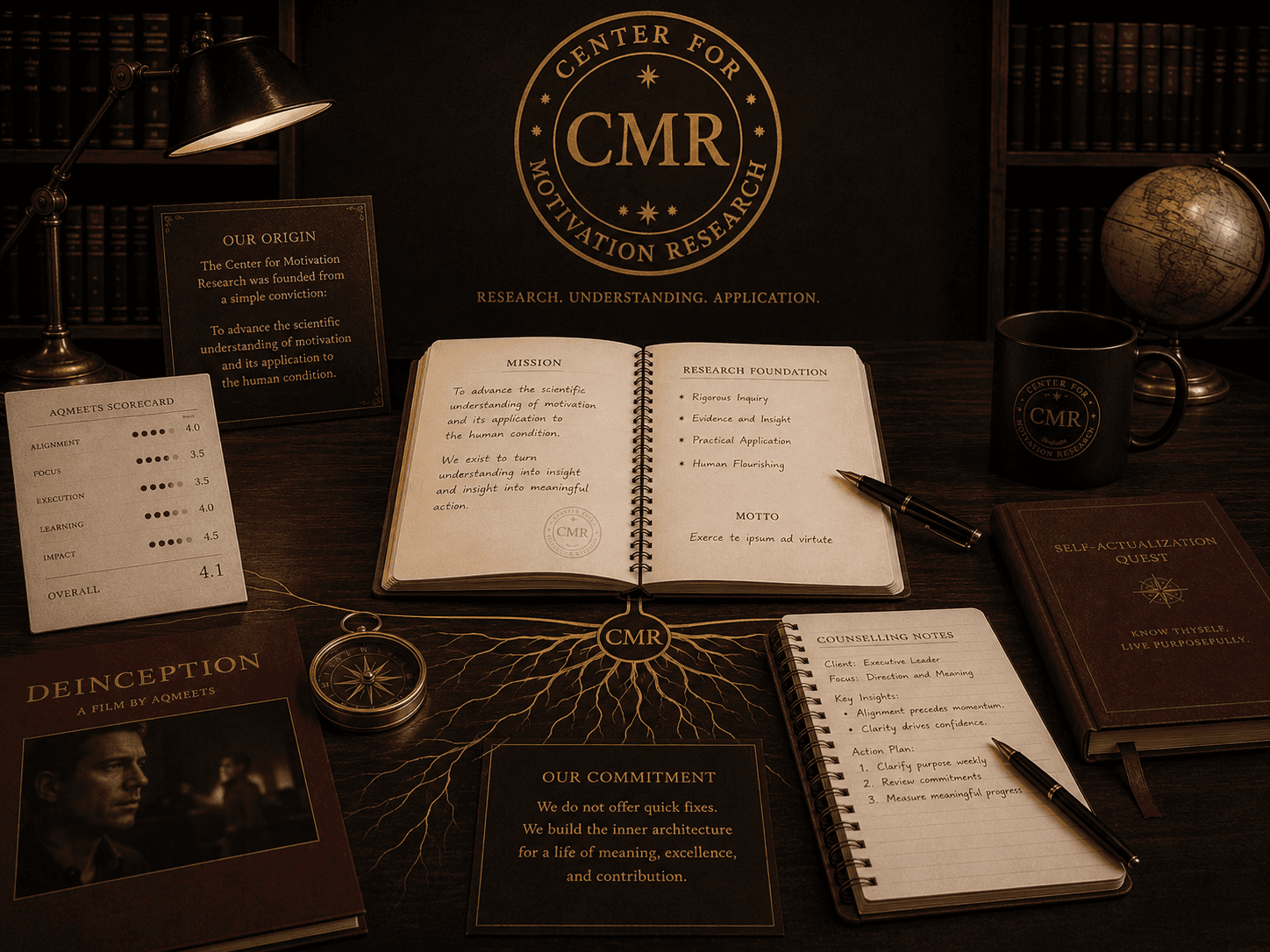
Its purpose is to gather the research, counselling, writing, scorecards, masterclasses, AQMeets programs, and documentary projects into one larger body of work: helping people understand what truly moves them, and helping them act more faithfully on what they already know to be good.
The Values That Shape the Work
Integrity
Integrity means wholeness between conviction and conduct.
A person with integrity does not merely explain what he values. He seeks to live in a way that can bear the weight of that claim.
For us, integrity requires honest review, truthful feedback, and the courage to notice where reality has departed from intention.
Autonomy
Autonomy means disciplined self-government.
It is not mere independence, self-expression, or resistance to authority. It is the capacity to govern oneself according to reason, responsibility, and rightly ordered aims.
A person who lacks autonomy is easily ruled by mood, pressure, distraction, approval, resentment, or convenience.
Magnanimity
Magnanimity means greatness of soul ordered toward worthy work.
It is not vanity. It is not ambition for display. It is not the hunger to appear important.
It is the willingness to take responsibility for serious aims without shrinking into comfort, triviality, or fear.
These values shape the Center’s approach to motivation. We are not interested in temporary excitement. We are interested in the deeper formation that allows a person to act with clarity, discipline, and purpose over time.
A Body of Work Around Meaning and Action
That concern is being developed through three connected bodies of work.
A Research Body
Essays, frameworks, studies, and public analysis focused on motivation, habit, attention, responsibility, and the movement from insight to action.
A Counselling Body
Direct work with leaders and serious individuals who need to examine the distance between conviction, conduct, and responsibility.
An Applied Body
Scorecards, masterclasses, review practices, AQMeets programs, and practical rhythms that help people bring their aims back into contact with reality.
Each expression serves the same underlying purpose: to help people understand why they drift from what matters — and how they can return with greater truth, order, and strength.
Serious change does not begin with hype. It begins with a more honest reading of reality.
These questions are simple. They are also demanding.
Repeated honestly, they train a person to notice drift earlier and return before the damage deepens.
Begin With an Honest Reading of Your Week
Before you read another essay, buy another planner, or commit to another vague improvement cycle, begin with what can actually be seen.
The Execution Scorecard gives you a first reading of the space between your intentions and your present rhythm.
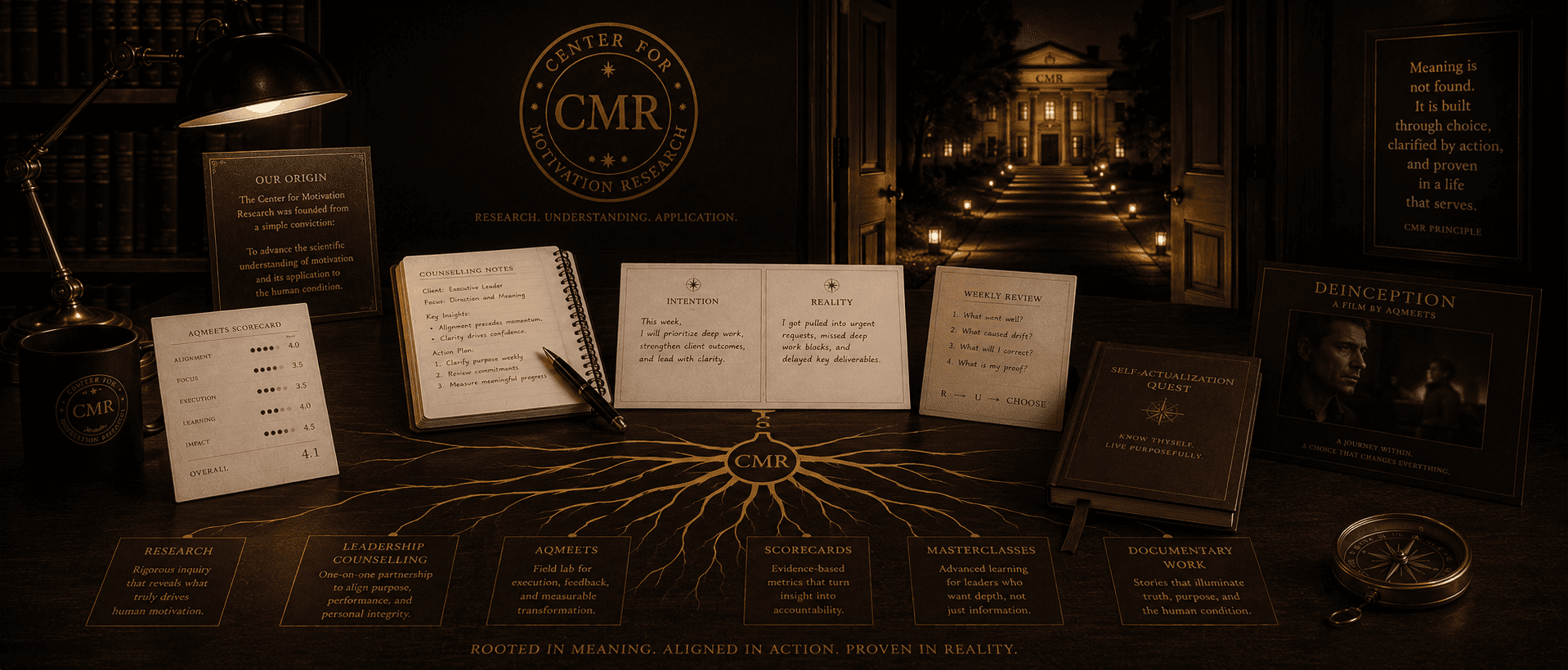
The first honest step is not to say more about what matters. It is to look at what your week has already proven.